In this blog we have reviewed John Wollaston's years in the British American colonies before his return to England, and we have seen his ermine attempt at turquerie. Here are a few of his portraits of more mature colonial American women. Another posting looks at Wollaston's portraits of young women.
+Rachel+Levy+Mrs+Isaac+Mendes+Seixas+1719-1797+Am+Jew+Hist+Soc+Waltham+MA+and+NYC.jpg) 1750 John Wollaston (1710-1775). Rachel Levy (Mrs Isaac Mendes Seixas). American Jewish Historical Society. New York City. (This depiction is from a lecture slide. Do not copy or reproduce. Contact the historical society for an accurate image.)
1750 John Wollaston (1710-1775). Rachel Levy (Mrs Isaac Mendes Seixas). American Jewish Historical Society. New York City. (This depiction is from a lecture slide. Do not copy or reproduce. Contact the historical society for an accurate image.)+Experience+Johnson+Mrs+Samuel+Gouverneur+Winterthur.jpg) 1750 John Wollaston (1710-1775). Experience Johnson (Mrs. Samuel Gouverneur). Henry Francis duPont Winterthur Museum. (This depiction is from a lecture slide. Do not copy or reproduce. Contact Winterthur for an accurate image.)
1750 John Wollaston (1710-1775). Experience Johnson (Mrs. Samuel Gouverneur). Henry Francis duPont Winterthur Museum. (This depiction is from a lecture slide. Do not copy or reproduce. Contact Winterthur for an accurate image.)+Anne+Carter+Harrison+Randolph+(c.+1724-after+1793).+John+Wollaston+VAHisSoc.jpg) 1750s John Wollaston (1710-1775). Anne Carter Mrs. Randloph Harrison). Virginia Historical Society, Richmond, Virginia. (This depiction is from a lecture slide. Do not copy or reproduce. Contact the historical society for an accurate image.)
1750s John Wollaston (1710-1775). Anne Carter Mrs. Randloph Harrison). Virginia Historical Society, Richmond, Virginia. (This depiction is from a lecture slide. Do not copy or reproduce. Contact the historical society for an accurate image.) 1750s. John Wollaston (1710-1775). Mary Meade Walker. Virginia Historical Society. Richmond.
+Dorothy+Willing+(Mrs.+Walter+Stirling)+Ronald+C.+Bauman,+Inc.,+Centerville,+Delaware..jpg) 1752 John Wollaston (1710-1775) Dorothy Willing (Mrs. Walter Stirling). (This depiction is from a lecture slide. Do not copy or reproduce.)
1752 John Wollaston (1710-1775) Dorothy Willing (Mrs. Walter Stirling). (This depiction is from a lecture slide. Do not copy or reproduce.)Mrs+Philip+Livingston+pvt.jpg) 1752 John Wollaston (1710-1775). Mrs. Philip Livingston. (This depiction is from a lecture slide. Do not copy or reproduce.)
1752 John Wollaston (1710-1775). Mrs. Philip Livingston. (This depiction is from a lecture slide. Do not copy or reproduce.)+Elizabeth+Tasker+Mrs+Christopher+Lowndes.jpg) 1754 John Wollaston (1710-1775). Elizabeth Tasker (Mrs. Christopher Lowndes). (This depiction is from a lecture slide. Do not copy or reproduce.)
1754 John Wollaston (1710-1775). Elizabeth Tasker (Mrs. Christopher Lowndes). (This depiction is from a lecture slide. Do not copy or reproduce.)+Mrs+Charles+Carroll+Detroit.jpg) 1754 John Wollaston (1710-1775). Mrs. Charles Carroll. Detroit Institute of Art. (Reproduction at popartmachine.com. Contact the museum for an accurate image.)
1754 John Wollaston (1710-1775). Mrs. Charles Carroll. Detroit Institute of Art. (Reproduction at popartmachine.com. Contact the museum for an accurate image.)Elizabeth+Harrison+Randolph+Mrs+Peyton+Randolph+VHS.jpg)
1755 John Wollaston (1710-1775). Elizabeth Harrison (Mrs. Peyton Randolph). Virginia Historical Society. (This depiction is from a lecture slide. Do not copy or reproduce. Contact the historical society for an accurate image.)
+Mrs+Wm+Allen+Brooklyn.jpg) 1756 John Wollaston (1710-1775). Mrs. Wm Allen. Brooklyn Museum. (This depiction is from a lecture slide. Do not copy or reproduce. Contact the museum for an accurate image.)
1756 John Wollaston (1710-1775). Mrs. Wm Allen. Brooklyn Museum. (This depiction is from a lecture slide. Do not copy or reproduce. Contact the museum for an accurate image.)+Martha+Dandridge+(Daniel+Parke+Custis)+(Mrs+George+Washington)+Washington+and+Lee.jpg) 1757 John Wollaston (1710-1775). Martha Dandridge (Mrs. Daniel Parke Custis) (Mrs. George Washington) Washington and Lee. (This depiction is from a lecture slide. Do not copy or reproduce. Contact Washington and Lee for an accurate image.)
1757 John Wollaston (1710-1775). Martha Dandridge (Mrs. Daniel Parke Custis) (Mrs. George Washington) Washington and Lee. (This depiction is from a lecture slide. Do not copy or reproduce. Contact Washington and Lee for an accurate image.)+Mary+Willing+Byrd+Mrs+Wm+III++VAHist+Soc.jpg) 1758 John Wollaston (1710-1775). Mary Willing (Mrs. William Byrd III). Virginia Historical Society. (This depiction is from a lecture slide. Do not copy or reproduce. Contact the historical society for an accurate image.)
1758 John Wollaston (1710-1775). Mary Willing (Mrs. William Byrd III). Virginia Historical Society. (This depiction is from a lecture slide. Do not copy or reproduce. Contact the historical society for an accurate image.)+Mary+Carroll+Mrs+Charles+Carroll+of+Duddington+pvt.jpg) 1760 John Wollaston (1710-1775). Mary Carroll (Mrs. Charles Carroll of Duddington). (This depiction is from a lecture slide. Do not copy or reproduce.)
1760 John Wollaston (1710-1775). Mary Carroll (Mrs. Charles Carroll of Duddington). (This depiction is from a lecture slide. Do not copy or reproduce.)+Lady+in+Gold+Dress+from+Charleston+Wisconsin.jpg) 1765-67 John Wollaston (1710-1775). Lady in Gold Dress from Charleston. Wisconsin. (This depiction is from a lecture slide. Do not copy or reproduce. Contact the museum for an accurate image.)
1765-67 John Wollaston (1710-1775). Lady in Gold Dress from Charleston. Wisconsin. (This depiction is from a lecture slide. Do not copy or reproduce. Contact the museum for an accurate image.)+Mary+Ross+Beale.+MESDA,+Windson+Salem,+NC2.jpg) 1765-67 John Wollaston (1710-1775). Mary Ross (Mrs. John Beale). Museum of Early Southern Decorative Arts, Winston Salem, North Carolina. (This depiction is from a lecture slide. Do not copy or reproduce. Contact MESDA for an accurate image.)
1765-67 John Wollaston (1710-1775). Mary Ross (Mrs. John Beale). Museum of Early Southern Decorative Arts, Winston Salem, North Carolina. (This depiction is from a lecture slide. Do not copy or reproduce. Contact MESDA for an accurate image.)
.

.+Magdalena+Douw+Mrs+Harme+Gansevoort+Winterthur.jpg)


.jpg)

+Eliz+storer+Mrs+Isaac+Smith+MFA.jpg)
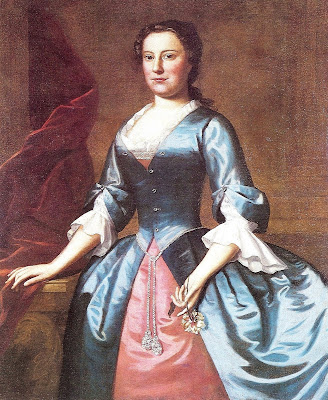+Anne+McCall+Philadelphia+Bayou+Bend+Houston+Mus+Fine+Arts.jpg)
+Anne+Shippen+Mrs+Chales+Willing+1710-1791+Winterthur.jpg)
+Mary+McCall+(1725-1799)++Mrs+William+Plumstead+(Mayor+of+Phil)+Phil+Acad+of+Arts.jpg)
+Mrs.+Charles+Apthorp+Grizzell+Eastwick+Apthorp+++++San+Fran+Fine+Arts.jpg)
+Mrs+Isaac+Winslow++Brooklyn+Museum.jpg)
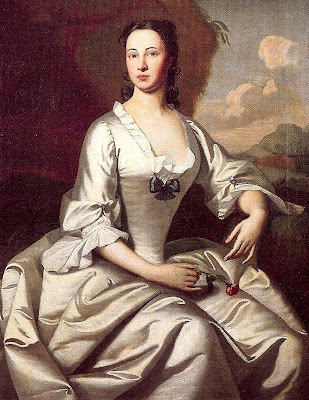.+Susannah+Faneuil+(Mrs.+James+Boutineau).+Nova+Scotia+Museum..jpg)
+Portrait+of+a+Woman+Art+Insti+of+Chicago.jpg)
+Mrs+Joseph+Reade+Met.jpg)
+Mrs.+Henry+Bromfield+(Margaret+Fayerweather+MFA+(3).jpg)
+Margaret+Tudor+Nicholls+(Mrs.+Richard+Nicholls+Museum+of+Fine+Arts,+Houston,+Bayou+Bend.jpg)

+Henry+Francis+duPont+Winterthur+Museum..jpg)
.++Sarah+Parker+(Mrs.+Charles+Lowndes).+Carolina+Art+Association-Gibbes+Art+Gallery.+Charleston,+SC.jpg)
+Reynolda+House+1st-art-gallery.com.jpg)
+Susannah+Holmes+(1739%E2%80%931771)+(Mrs.+Thomas+Bee).+The+Charleston+Museum,+Charleston,+South+Carolina..jpg)
.+Young+Southern+Woman..jpg)
.+Mary+Magdalen+Prioleau+(Mrs.+Thomas+Grimball.).jpg)
.+Mrs.+William+(Mary)+Mazyck.+The+Carolina+Art+Association,+Gibbes+Museum+of+Art.+Charleston,+South+Carolina.jpg)
.jpg)
.+Catherine+Van+Cortlandt+Van+Rensselaer+(1752-1785).jpg) c 1767 Thomas McIlworth (fl 1757-67). Probably Catherine Van Cortlandt (Mrs. James Van Rensselaer) (1752-1785).
c 1767 Thomas McIlworth (fl 1757-67). Probably Catherine Van Cortlandt (Mrs. James Van Rensselaer) (1752-1785).


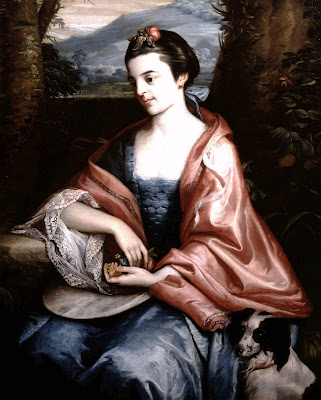.+Jane+Alien+(Mrs.+John+Penn)..jpg)


Elizabeth+Harrison+Randolph+Mrs+Peyton+Randolph+VHS.jpg)